

Drawing Style. What Is It?
And how do find yours?

At the end of this post, I’ll be sharing a look at pages no one has ever seen from my early days.
A couple years ago, a pal sent me a drawing he thought looked like my art. “This looks a little bit like your style”, he said, and my only response was “I have a style?!”
It’s not something I ever really thought about—I just draw the way I draw. Since then, I’ve been wondering what style IS. It’s technically defined as a particular manner or technique by which something is done, created, or performed, and that’s great if you need to ace a test on dictionary entries, but It’s not really helpful information for someone actually developing their style.
I’m not sure if there IS a helpful definition of style, but I’ve come to approach it as this: style is a limitation of technique. The more you draw (or dance or sing or write—I’ll stick with drawing because, well, you know) the more technique you’ll learn, and the more you’ll want to use ALL of it. And you can, and that would be a style. But if you focus on the techniques you prefer, you’ll end up with something more specific and unified.
At first, you’ll be using every technique in your sketchbook, from all the line weights to the eye shapes to crosshatching, and to the many others you’ll have tried out on your drawing journey. You’ll start to prefer some over others for various reasons—maybe your favourite artists use a particular style of anatomy or a specific type of line. Or, you’ll prefer a technique strictly because of the way it feels to move your hand, gravitating to stippling over crosshatching. You may even decide to take a minimalist approach and axe definition all around, forgoing any form of toning. It all comes down to the tastes you accumulate through a combination of your consumption habits and your body’s physical preferences, but either way, you’ll have a better understanding of what you like, and why. But we change, so what happens when those preferences change with us?
You learn more! I was influenced by European creators early in my drawing adventure. Hugo Pratt, for example. His ink washes, loose improvised lines, and simplicity were an awakening for me. In watching cartoonists like Lemire and Kindt take cues from some of that washy, inky work, I really locked into that aesthetic. It became my focus, discarding most of the other techniques I’d been approaching—rigid anatomy, precise realistic line work—in favour of more emotional, visceral art, which lent itself to the more personal stories I wanted to tell. As time went on and I found myself reading more Japanese cartoonists, I found myself leaning more into action with tighter anatomy, more precision in line work, and the implementation of screentone. The style went through a big change as techniques were replaced—eyes and hair became “Toriyamized” and the books became more action-focused. Now, I’m trying to find a happy medium, and I anticipate I’ll draw slightly differently in the next few years than I do today. I embrace that.
I’m going to show off a few pages from earlier in my drawing adventure to demonstrate how and where things changed for me. Before I do, a few closing suggestions to try out if you’re experimenting with discovering a style… which is a bit of an off thing to say, because you already have a style, regardless of whether or not you see it.
“Ruin” your work. Draw something, and then mess it up. Colour it with the “wrong” colours, draw sections too light or too dark, or make choices you believe are antithetical to your perceived success of the drawing. That’s how I discovered I loved toning warm colours with cool shades.
If you can, visit an art shop and try something you’ve never used before, and something you’d never think to use. I bought some $3 rubber stamps with leaves on them, and used them to texture foliage, for example. It’s how I discovered I LOVE using stamps on pages!
Trace work! This one may be controversial, but buy some tracing paper, and trace other cartoonists’ work. I’ve done this a few times to understand proportions, foreshortening, and the relationship between certain features (eye width, head shape, etc.) and how to either implement those techniques on my own, or decide why I’d rather not. Disclaimer: never use traced work for anything other than learning. Bin it or add it to a box of old drawings when you’re done.
Lastly, here’s a look at some old material that’s never seen the light of day. These were pages I was drawing for maybe $25 CAD many years ago when I was finding my footing.
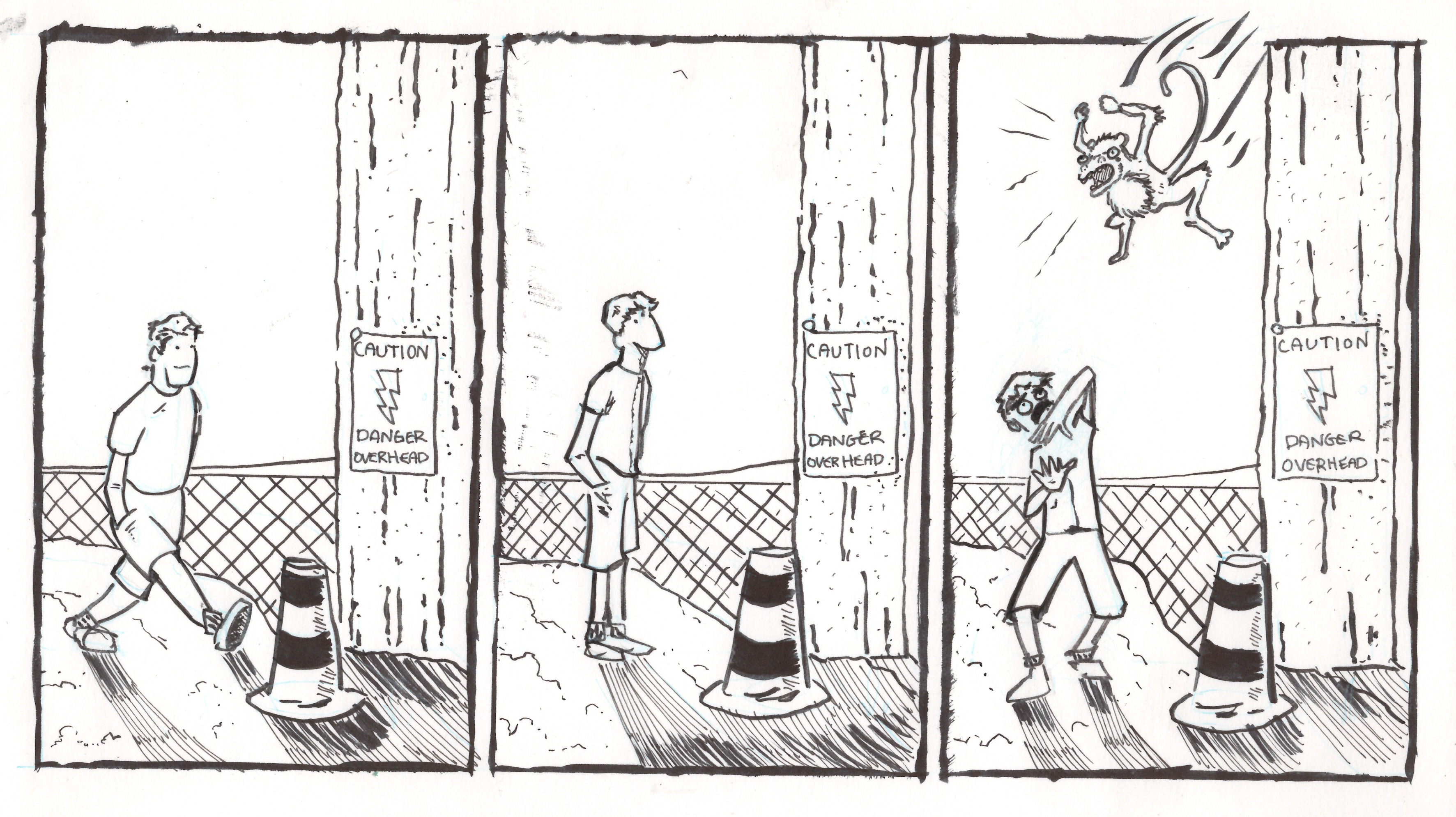
Here’s one of the first attempts I made at comics. Very little in the way of toning!
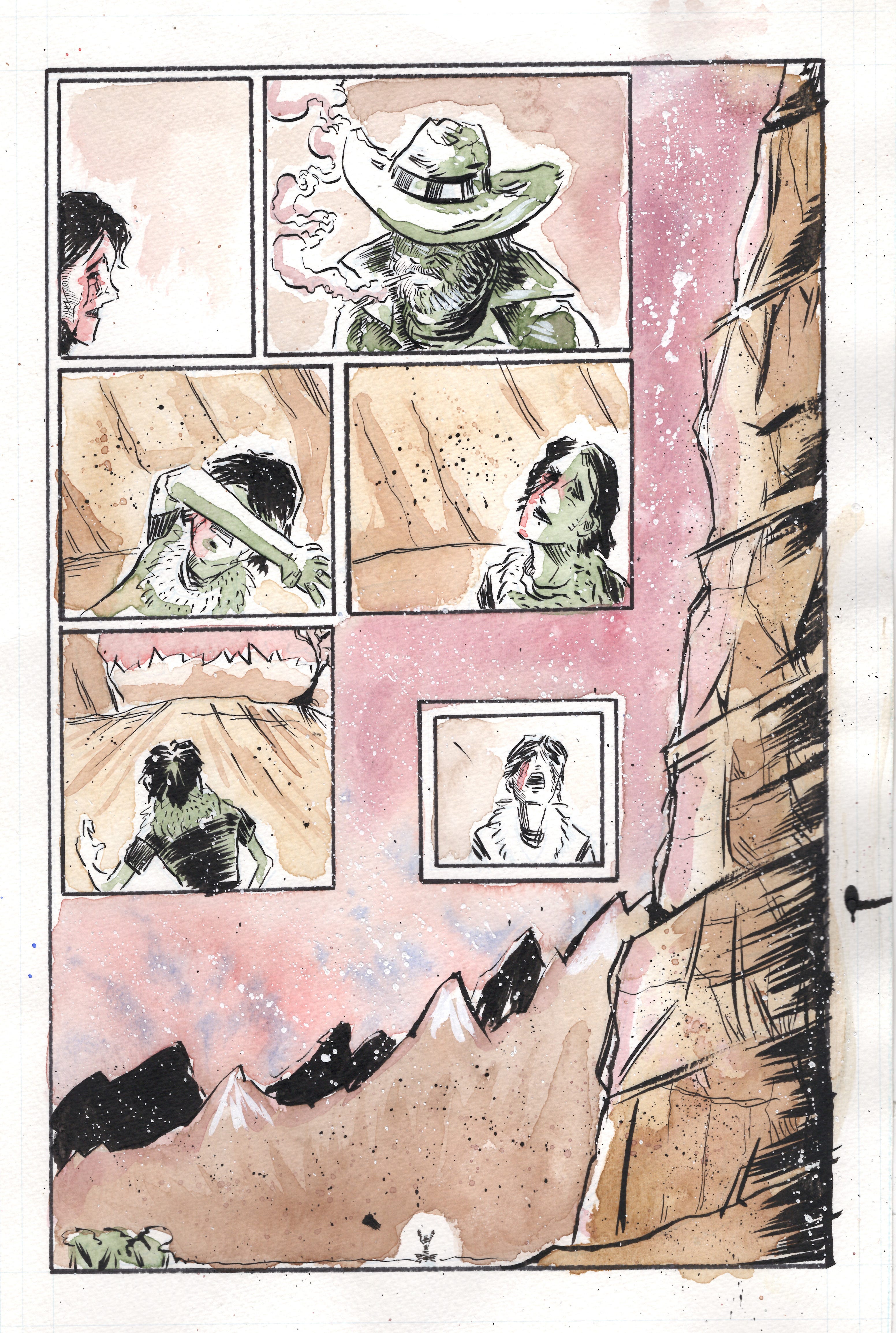
After that came TerraQuill, where I thought I’d try telling stories instead of gags. I also began painting here for the first time. Very crude, but it worked.
After TerraQuill, I was hired on for an indie comic about a troubled drifter reconnecting with family—the exact kind of story I love to really sink into. It was toned in ink, and one of the first long-format stories I told. Not a lot changed between TerraQuill and this story, but as it went on, there were subtle improvements.
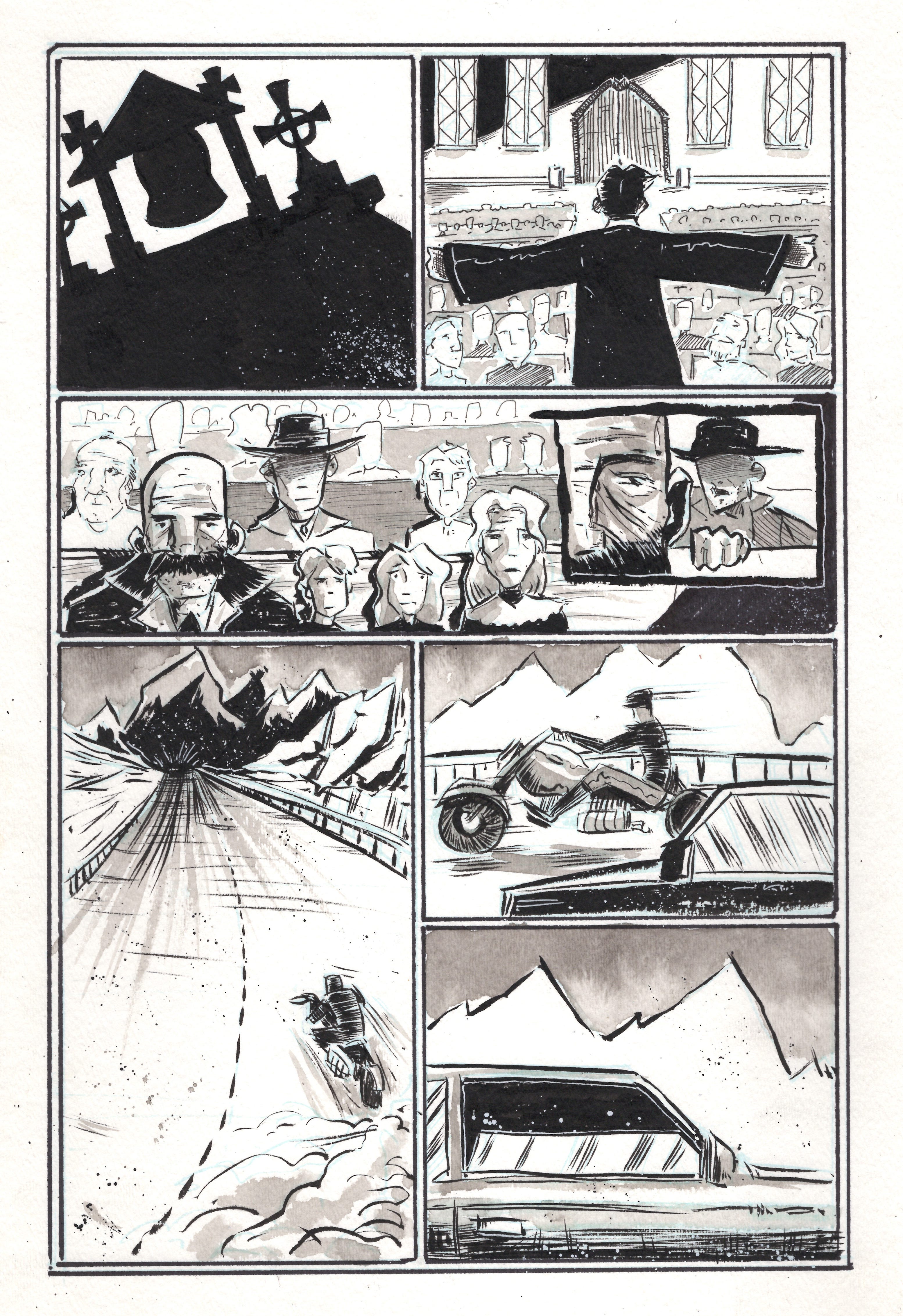
I began to put more thought into the lines and faces, drawing features with more contrast and buildings with more structure. I learned a lot on this book. It was never published.
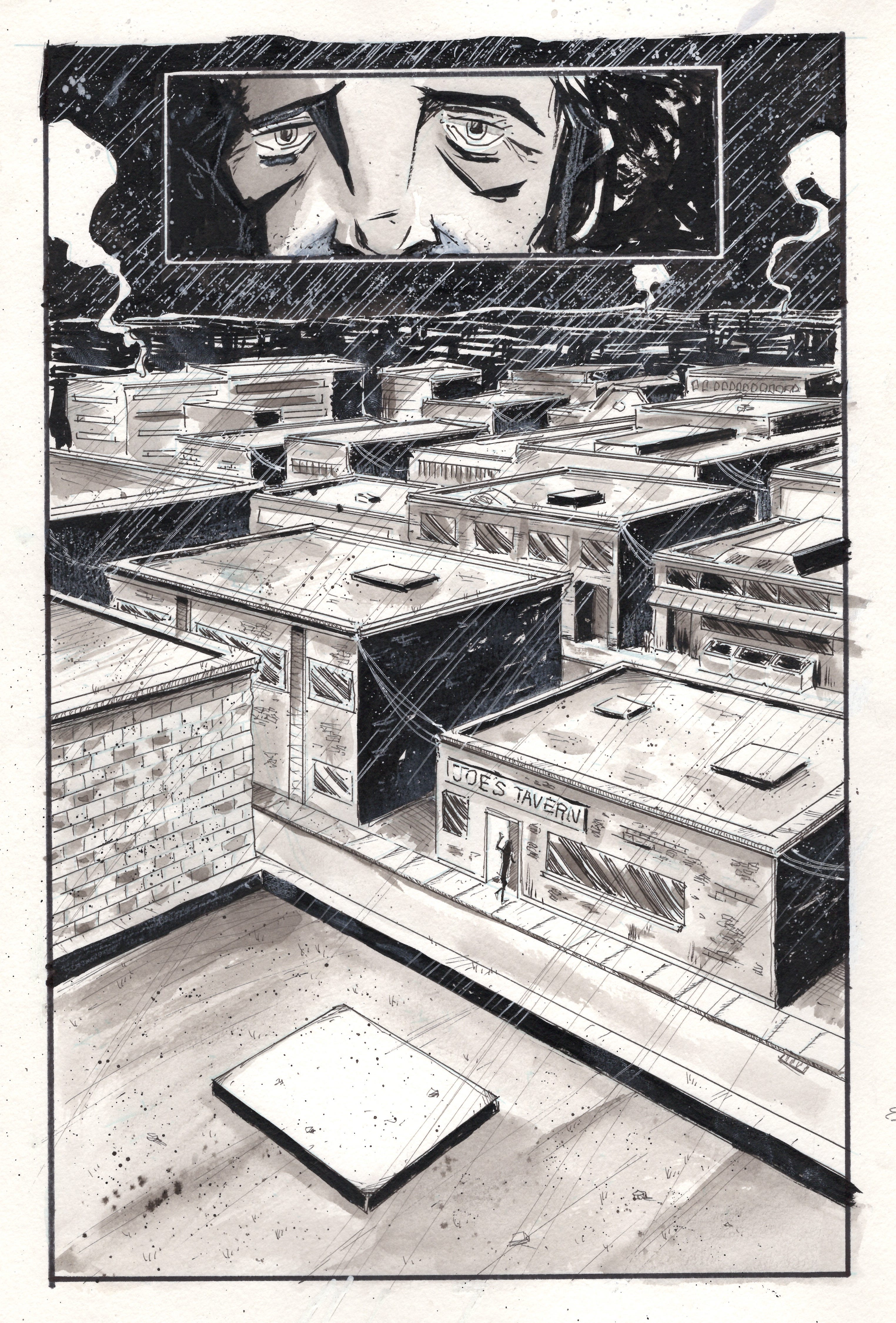
Then, I was hired for another indie book about aliens. I tried to really simplify things here and focus on repeating features instead of just drawing them on a whim. Drawing eyes and eyebrows and noses the same, for instance. That seems like something you’d do naturally, right? But when you’re learning, you want to try it all. This was one of the first books on which I started limiting myself. It also was never published.
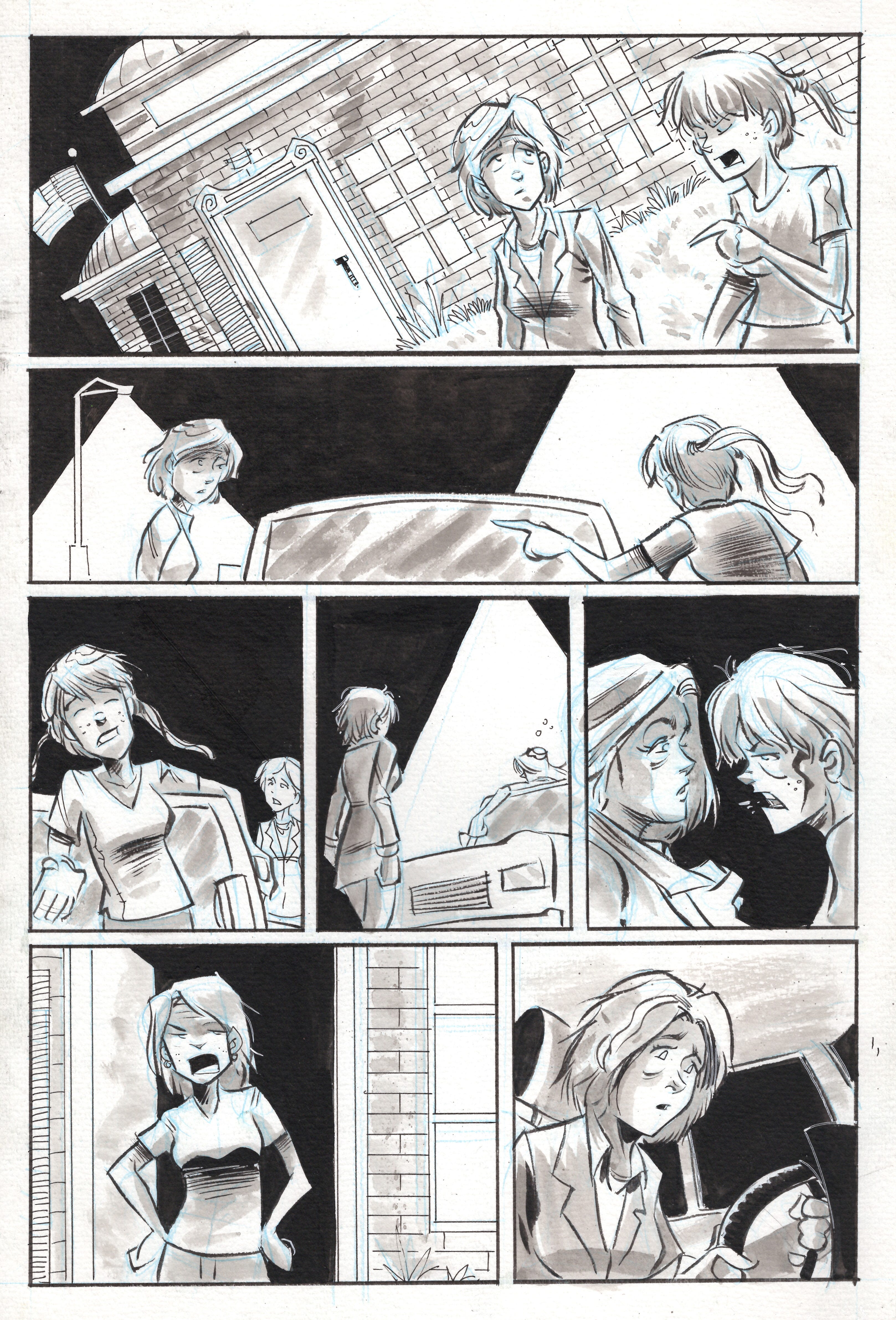
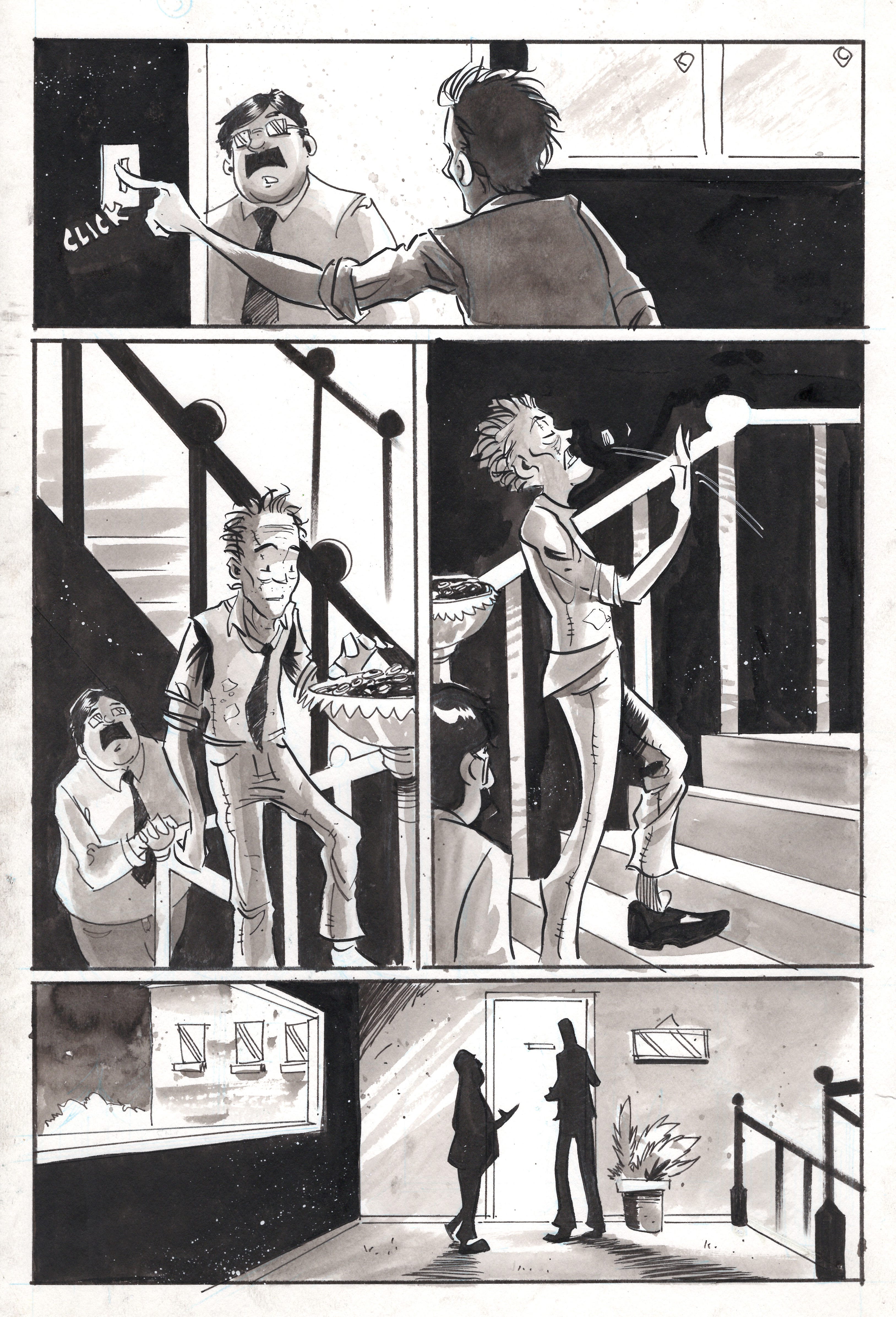
That led to another indie project that WAS published! I don’t think the publisher exists today, but it was neat to hold a copy of it at the time. This was when I tried to hone in on what I learned on the last book, and think more about contrast, applying heavier black ink sections (spot inks) and thinking about a more cartooned anatomy. This story was about a chain smoking zombie detective and his mortician best friend.
I’ve got over 1000 pages tucked away from projects and books no one’s ever seen. I’d be happy to share more if you’d like, and break down the choices that led to where I am today. It’s fun revisiting these! I hope there’s been something interesting or helpful tucked away in here. I’m currently sharing all of my process for Mighty Morphin Power Rangers / Usagi Yojimbo here on Patreon, so hop over there if you’d like more. My web store also has some comics and art if you’re looking.
Till next time!
I just recently won a page of yours at auction and hadn’t realize how much work you’d done. This lead me to here great newsletter.